Introduction
In 2025, businesses are undergoing a major transformation fueled by the rise of autonomous AI agents—intelligent digital systems capable of operating without human intervention. These AI-powered agents are not just tools; they are becoming independent decision-makers, task managers, and problem-solvers across industries. From automating complex workflows to generating new business insights in real-time, AI agents are redefining how companies operate, compete, and grow.
The Rise of Autonomous AI Agents
AI agents are software programs powered by machine learning, natural language processing (NLP), and large language models (LLMs). Unlike traditional bots, these agents can plan, reason, and adapt to changing environments. In 2025, we are seeing AI agents capable of handling customer support, managing marketing campaigns, executing financial operations, and even developing code with minimal supervision.
Tech giants like Google, OpenAI, and Microsoft are leading this evolution, but startups and SMBs are also leveraging open-source frameworks to deploy task-specific AI agents. Tools like Auto-GPT, AgentGPT, and LangChain have become mainstream for building custom AI workflows.
Transforming Business Operations Across Industries
AI agents are now being embedded in business ecosystems to streamline operations and cut down on repetitive tasks. For example:
- Customer Service: AI agents can respond to customer queries, resolve issues, and escalate only critical cases to human agents—enhancing speed and satisfaction.
- Finance: Autonomous tools are managing accounts, analyzing cash flow trends, and detecting fraud in real-time.
- Marketing: AI agents can plan, schedule, and monitor multi-channel campaigns, including A/B testing and SEO optimization—completely autonomously.
- Software Development: DevOps teams are utilizing AI co-pilots to write, debug, and deploy code with continuous learning from the codebase.
These agents operate 24/7, continuously improving from data, reducing error rates, and boosting overall productivity.
Business Benefits of AI Agents in 2025
Companies adopting AI agents are seeing significant cost savings, faster decision-making, and enhanced customer experiences. The most notable benefits include:
- Increased Efficiency: Automating routine tasks frees human employees to focus on strategic work.
- Scalability: Businesses can scale operations without proportional increases in staffing or overhead.
- Data-Driven Decisions: AI agents analyze massive data sets in real-time, offering actionable insights faster than any human team could.
- Competitive Edge: Businesses using AI agents can pivot quicker, deliver better services, and adapt to market shifts almost instantly.
Challenges and Ethical Considerations
Despite the benefits, AI agents also present challenges. Data privacy, bias in decision-making, and lack of transparency are concerns that businesses must address. There’s also the need for governance frameworks to ensure these agents act within ethical boundaries.
In 2025, many businesses are investing in AI ethics officers and forming internal committees to audit AI behaviors and outcomes. Regulatory bodies are also working on standards to ensure fair and responsible AI deployment.
Future Outlook: Co-Working with AI Agents
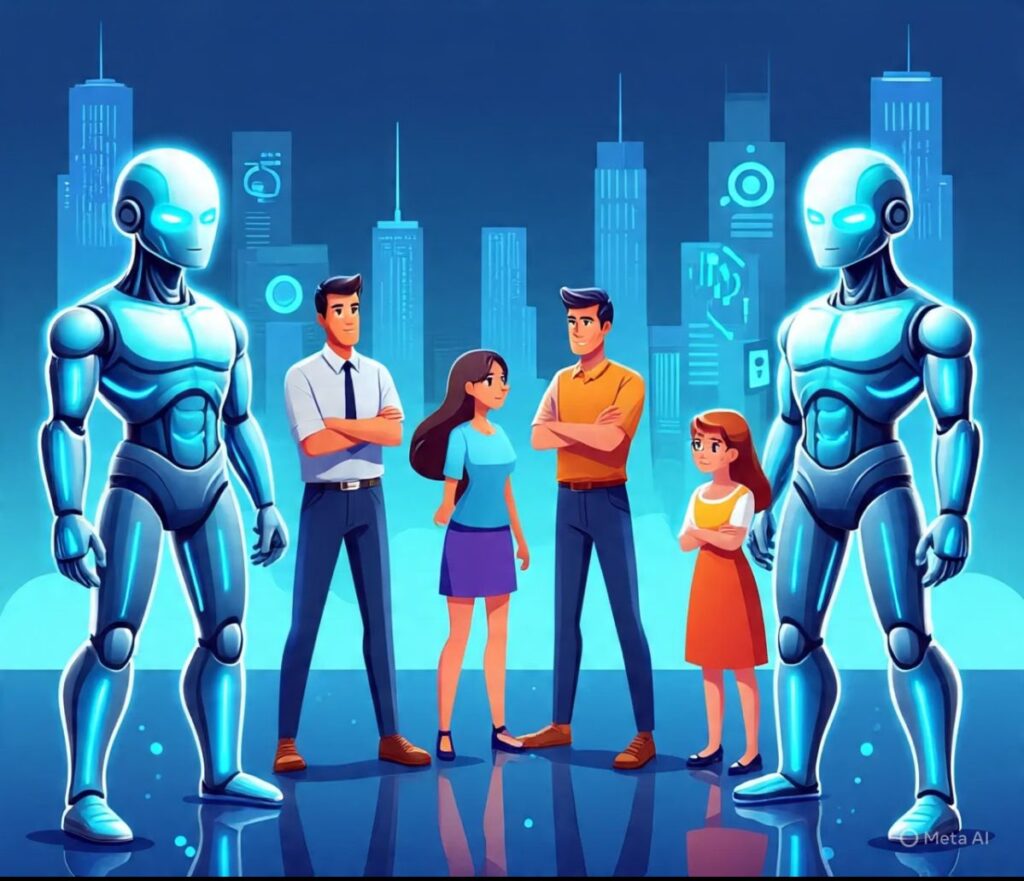
The future isn’t about AI replacing humans but rather humans working alongside autonomous AI agents. As these tools become more reliable, we can expect hybrid teams—where AI handles execution and humans provide oversight, creativity, and empathy.
The AI agent revolution is just beginning, and 2025 marks the year when businesses stopped asking if they should adopt AI—and started asking how fast they can scale it.
Conclusion
Autonomous AI agents are no longer a concept of the future—they’re a transformative force in business today. From startups to global enterprises, those embracing AI-driven autonomy are gaining speed, precision, and insights at levels previously unimaginable. As we move further into the AI-first economy, staying ahead means understanding and integrating these agents into the core of your business strategy.