Introduction
Starting a business in 2026 can be exciting, but finding the money to launch a new company is one of the biggest challenges for entrepreneurs. Many startups need financing for equipment, inventory, marketing, technology, office space, and daily operating expenses. However, traditional banks often hesitate to approve business loans when a company has no revenue or financial history.
The good news is that small business loans for startups with no revenue are still possible. Several lenders and funding programs consider personal credit, business plans, collateral, and future earning potential instead of relying entirely on existing business income.
Can You Get a Small Business Loan With No Revenue in 2026?
Yes, entrepreneurs can qualify for certain startup loans without generating revenue. However, approval depends on the lender, the applicant’s financial background, and the proposed business model.
Traditional banks generally prefer businesses with established revenue and a proven repayment history. In contrast, nonprofit lenders, community development financial institutions (CDFIs), and specialized startup financing providers may consider applications from businesses that have not started earning money.
For startups, lenders typically evaluate whether the business has a realistic opportunity to generate enough income to repay the borrowed amount.
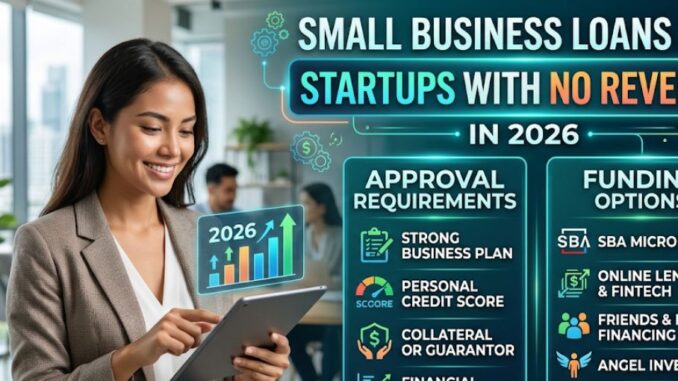
Approval Requirements for Startups With No Revenue
Although requirements differ between lenders, several important factors can improve your chances of getting approved.
1. Personal Credit Score
Personal credit history is particularly important when applying for startup financing. Since a new company has no established financial record, lenders may evaluate the owner’s creditworthiness.
A credit score of 620 or higher can help with certain financing options, although some lenders accept lower scores. A stronger credit profile may also help applicants qualify for better interest rates.
2. Detailed Business Plan
A professional business plan can strengthen an application when the company has no revenue. It should explain the business idea, target customers, competitors, expected expenses, marketing strategy, and projected income.
Lenders want to understand how the startup will generate revenue and repay its loan.
3. Financial Projections
Applicants should prepare realistic financial forecasts covering at least 12 months. Include estimated sales, operating costs, monthly expenses, and expected profitability.
4. Collateral or Personal Guarantee
Some lenders may request collateral, such as business equipment, vehicles, or other eligible assets. A personal guarantee may also be required, making the business owner personally responsible for repayment if the company defaults.
Best Funding Options for Startups Without Revenue
1. SBA Microloans
The U.S. Small Business Administration (SBA) offers a microloan program providing financing of up to $50,000 through approved nonprofit intermediary lenders.
These loans can support startup expenses, inventory, working capital, supplies, and equipment purchases. Individual lenders establish their own approval requirements, so entrepreneurs should compare participating organizations before applying.
2. Community Development Financial Institutions (CDFIs)
CDFIs provide financing to businesses that may struggle to qualify for traditional bank loans. Some organizations specifically support new entrepreneurs, underserved communities, and small businesses with limited financial histories.
Depending on the lender, applicants may receive funding based on their business plans, personal credit, and financial projections.
3. Equipment Financing
Startups that need computers, machinery, commercial vehicles, or specialized tools can consider equipment financing.
The purchased equipment generally serves as collateral, potentially making approval easier than an unsecured business loan.
4. Business Credit Cards
Business credit cards can help cover smaller startup expenses, including software subscriptions, advertising, office supplies, and business purchases.
However, interest rates can be high, so entrepreneurs should carefully manage balances and repayment schedules.
5. Personal Loans for Business Startup Costs
Some entrepreneurs use personal loans to finance their initial business expenses. Approval generally depends on personal income, credit history, and existing financial obligations.
Before choosing this option, understand that the debt remains your personal responsibility even if the business fails.
Documents Required When Applying
Most startup lenders may request several documents before reviewing an application. These commonly include:
- Government-issued identification.
- Personal credit history.
- Business registration documents.
- Detailed business plan.
- Estimated startup expenses.
- Bank statements.
- Financial projections.
- Tax returns, when available.
- Collateral information, if required.
Having these documents prepared can make the application process smoother.
How to Improve Your Loan Approval Chances in 2026
Start by calculating exactly how much money your business needs. Avoid borrowing more than necessary because repayment obligations can become difficult before your company establishes consistent revenue.
Compare multiple lenders, review interest rates, understand repayment periods, and check for additional fees. You should also consider approaching nonprofit business organizations for financial guidance before applying.
Final Thoughts
Getting a small business loan without revenue in 2026 may require additional preparation, but several funding opportunities are available. SBA microloans, CDFIs, equipment financing, business credit cards, and personal loans can provide different ways to finance a new venture.
The most important step is demonstrating that your business has a realistic financial plan and a clear path toward profitability. Compare your options carefully, borrow responsibly, and choose financing that your startup can reasonably repay as it grows.
Views: 0
Leave a Reply