Understanding Non-QM Mortgage Loans
Buying a home in the United States has become more challenging for many borrowers who do not fit traditional lending rules. While conventional mortgages are designed for people with steady income, strong credit scores, and simple financial records, many Americans today earn money in different ways. Self-employed workers, freelancers, real estate investors, and business owners often struggle to qualify for standard home loans even when they earn a good income. This is where Non-QM mortgage loans have become an important option.
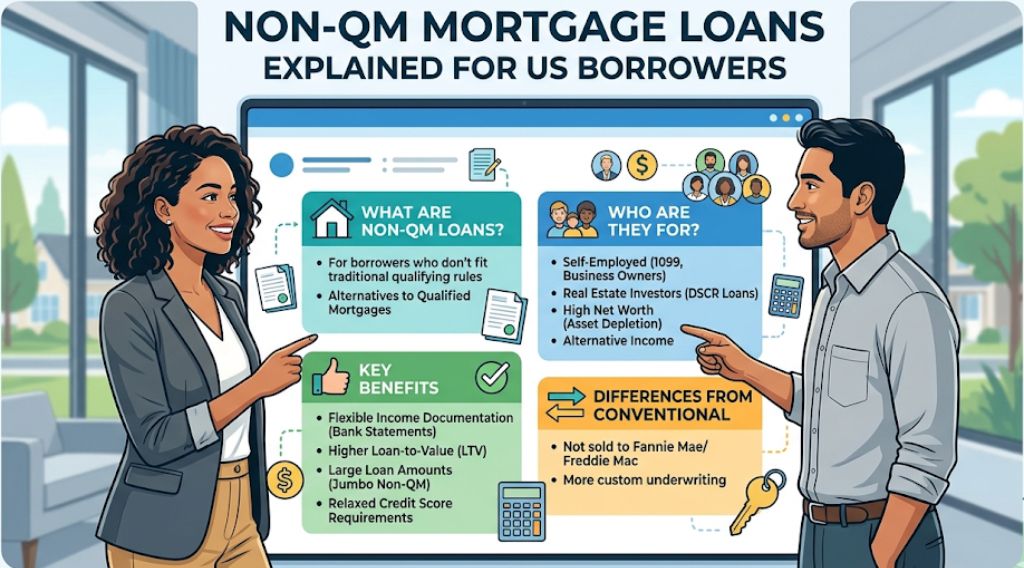
Non-QM stands for Non-Qualified Mortgage. These loans are designed for borrowers who cannot meet the strict guidelines required for traditional qualified mortgages. A Non-QM loan still allows people to buy or refinance homes, but lenders use more flexible methods to evaluate income and financial stability. These loans have gained popularity in recent years because the modern workforce includes more independent contractors and gig economy workers than ever before.
How Non-QM Loans Work
Traditional mortgage lenders usually ask for tax returns, W-2 forms, and proof of stable employment over several years. Non-QM lenders, however, can approve borrowers using alternative documentation. Instead of focusing only on tax returns, they may review bank statements, business cash flow, rental income, or assets.
For example, a self-employed business owner may write off many expenses on taxes, making their official income appear lower than it actually is. A traditional lender may reject the application because the reported income does not meet qualification requirements. A Non-QM lender can examine monthly deposits and overall financial health to determine the borrower’s ability to repay the loan.
These loans are not considered risky simply because they are different from conventional mortgages. Lenders still verify a borrower’s financial situation carefully. The main difference is that they use more flexible qualification methods.
Who Can Benefit from Non-QM Mortgages
Non-QM loans are especially useful for self-employed borrowers. Millions of Americans now work independently, operate online businesses, or earn income from freelance projects. These borrowers often have strong earnings but inconsistent paperwork that does not fit standard mortgage rules.
Real estate investors also commonly use Non-QM loans. Some programs allow approval based on rental property income rather than personal employment income. This makes it easier for investors to expand their property portfolios without facing strict conventional loan limitations.
Borrowers recovering from past credit problems may also benefit from these loans. Someone who experienced bankruptcy, foreclosure, or temporary financial hardship may still qualify for a Non-QM mortgage sooner than they would with a traditional loan program.
Foreign nationals purchasing property in the United States sometimes use Non-QM loans as well because international income documents may not match American lending standards.
Advantages of Non-QM Loans
One major advantage of Non-QM mortgages is flexibility. Borrowers who would otherwise be denied a home loan may finally gain access to financing. These loans can help people with unique income situations achieve homeownership or invest in real estate.
Another benefit is faster approval for some borrowers. Since lenders can evaluate income differently, applicants with strong cash flow may avoid the lengthy challenges that come with conventional underwriting.
Non-QM loans can also provide larger loan amounts for high-income borrowers whose tax returns do not accurately reflect their true earnings. This is especially useful in expensive housing markets where home prices continue to rise.
Important Things to Consider
Although Non-QM loans offer flexibility, they may come with higher interest rates compared to conventional mortgages. Lenders take on additional risk by using alternative qualification methods, so rates and down payment requirements can sometimes be higher.
Borrowers should also review loan terms carefully. Some Non-QM mortgages include adjustable rates or unique repayment structures. Understanding the long-term costs is important before signing any agreement.
Working with an experienced mortgage lender can help borrowers compare different options and find a loan that matches their financial goals. Careful planning is essential to ensure monthly payments remain affordable over time.
Conclusion
Non-QM mortgage loans have become an important solution for modern American borrowers who do not fit traditional lending standards. As self-employment and alternative income sources continue to grow, more people are turning to flexible mortgage programs to achieve homeownership. These loans provide opportunities for borrowers with strong financial potential but unconventional income documentation.
For many Americans, a Non-QM mortgage can open doors that conventional loans keep closed. By understanding how these loans work and comparing lenders carefully, borrowers can make smarter financial decisions and move closer to owning their dream home.