Introduction
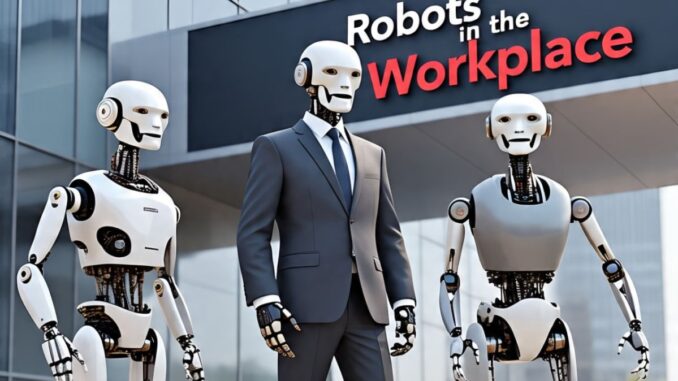
In recent years, the world has witnessed the rapid advancement of robotics, but 2025 marks a historic turning point: humanoid robots are now entering mainstream jobs. These robots, once seen as sci-fi fantasies or experimental lab creations, are increasingly being deployed in customer service, logistics, manufacturing, and even healthcare. As artificial intelligence continues to evolve, humanoid robots are no longer just performing tasks—they are beginning to interact, assist, and adapt within human environments.
The Rise of Humanoid Robotics
The development of humanoid robots has been in progress for decades, but the technology has now reached a level of sophistication that allows them to operate in real-world settings. Unlike traditional industrial robots, humanoids are designed to mimic human form and behavior, equipped with advanced AI, sensors, and dexterous limbs that allow them to navigate diverse workplaces. Companies like Tesla (with Optimus), Agility Robotics (with Digit), and Hanson Robotics (with Sophia) have showcased the potential of robots that not only walk and talk but can also learn and respond in real time.
This leap has been fueled by breakthroughs in AI, machine learning, natural language processing, and energy efficiency. As these technologies converge, humanoid robots have become more autonomous, responsive, and affordable, making them viable options for mainstream employment.
Integration into the Workforce
One of the most noticeable trends in 2025 is the integration of humanoid robots into customer-facing roles. In retail stores, robots now greet customers, provide directions, restock shelves, and even answer product-related questions using advanced speech recognition. Restaurants are deploying robots as hosts and servers, while hotels are using them at front desks to handle check-ins and inquiries around the clock.
In factories and warehouses, humanoid robots are increasingly being used to fill labor shortages. Unlike fixed robotic arms, these robots can move freely, lift objects, and collaborate with human workers on assembly lines. They are also being used for repetitive and physically demanding tasks, which helps reduce workplace injuries and increase efficiency.
Healthcare is another sector embracing humanoid robotics. Robots are assisting in elderly care facilities, offering companionship, reminding patients to take medications, and helping with mobility. In hospitals, they support nurses by delivering supplies or monitoring patients using built-in sensors. Their ability to operate tirelessly without fatigue makes them valuable assets in high-pressure environments.
Economic and Social Impacts
The entrance of humanoid robots into the job market raises important questions about labor, economics, and ethics. On one hand, these robots can help fill critical labor gaps, especially in countries facing aging populations and declining birth rates. They offer consistent productivity and can work in conditions that might be unsafe for humans.
However, there is concern over job displacement. As humanoid robots become more capable, some fear that low-skill and repetitive jobs may disappear, leaving vulnerable workers unemployed. Economists and policymakers are urging governments to invest in reskilling and upskilling initiatives so that humans can transition into roles that require creativity, emotional intelligence, and complex decision-making—skills that robots still lack.
A Future of Human-Robot Collaboration
Rather than replacing humans entirely, the future likely lies in collaboration. Humanoid robots can serve as tools that augment human abilities. For example, in warehouses, they can handle heavy lifting while humans focus on coordination and quality control. In offices, they can take over mundane tasks like data entry or scheduling, freeing up employees for more strategic work.
This collaborative model is already being tested across multiple industries, and early results are promising. Workers are reporting fewer injuries, higher efficiency, and even better job satisfaction when robots take over physically taxing or monotonous duties.
Conclusion
The entry of humanoid robots into mainstream jobs is not just a technological milestone—it’s a societal shift. As we move forward, the focus should not be on man versus machine but on building a workforce where humans and robots complement each other. By embracing this evolution thoughtfully, we can unlock new levels of productivity, safety, and innovation while ensuring that the human workforce remains at the heart of our economic systems.
Leave a Reply